
SCDNA26 Keynote Speakers
Vincent Coltellino
Project Manager at the U.S. Library of Congress
Moving forward: perspective from an archival institution
The Library of Congress is currently executing a feasibility study in partnership with the University of Washington’s Molecular Information Systems Lab (MISL) to determine if/how DNA data storage fits into the Library’s current data storage ecosystem. Bringing perspective from the ongoing project, this presentation will bring a user-centric viewpoint to the potential large-scale commercialization of DNA data storage. The discussion will include topics such as critical enterprise customer requirements, thoughts on facilitating adoption of DNA data storage, and how, in its current state, DNA data storage fits into the current data storage environment. The goal being to challenge the community to heavily consider the next steps as we enter unprecedented times where data proliferation is outpacing storage production.
Jeff Nivala
Assistant Professor at University of Washington
DNA data storage, art, and public engagement
This keynote explores DNA data storage from a perspective that extends beyond the laboratory, drawing on a series of art and public-facing projects involving Jeff Nivala. Through works such as Grow Your Own Cloud and Data Trust, the talk examines how molecular storage technologies intersect with broader questions of memory, data ownership, and societal impact. By bridging science, art, and public engagement, the keynote offers a wider lens on DNA data storage—highlighting its cultural, ethical, and social dimensions, and exploring how it can move from a purely technical domain into a more accessible and participatory space.
Roger Rudoff
VP of Engineering Atlas Data Storage
High density CMOS-based synthetic DNA data storage systems
The deployment of practical synthetic DNA data storage systems has been constrained by the cost and scalability of manufacturing large, high‑complexity oligonucleotide libraries. The speech describes the design and scale‑up of massively parallel, CMOS‑integrated electrochemical DNA synthesis arrays and reviews progress toward incorporating this technology into a fully integrated, end‑to‑end DNA data storage system suitable for production use.
Damien Woods
Professor at the Hamilton Institute, Maynooth University
Thermodynamically favoured DNA data structures and algorithms
A few billion years ago, Biology invented DNA for data storage. Evolution overcame a number of key problems that we are yet to solve in the DNA data storage and DNA computing communities: How should molecular programs interact with molecular data? Are there molecular data structures that enable efficient storage? Should molecules be well-mixed in solution or have a fixed arrangement in 3D space? How can data be maintained and accessible over time? What forms of error-correction work best in a molecular context? Beyond addressing these questions, the talk will focus on the benefits of data + compute being in proximity, and the benefits of a thermodynamically favoured approach to both.
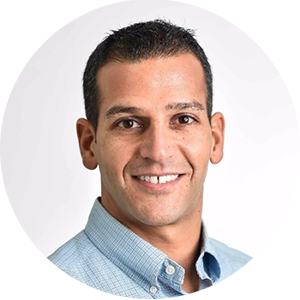
Eitan Yaakobi
Professor at Technion - Israel Institute of Technology
Coding for efficient and scalable DNA synthesis
DNA-based storage systems rely on large-scale parallel synthesis, where the number of synthesis cycles directly determines time and cost. In this talk, we present a coding-theoretic perspective on DNA synthesis, highlighting recent advances in modeling synthesis processes, optimizing synthesis sequences, and designing codes that improve efficiency and robustness. We discuss frameworks based on supersequences, shortmers, and constrained systems, along with connections to information theory through capacity and rate analyses. Finally, we outline emerging challenges and directions, including new coding problems motivated by evolving synthesis technologies.